

Wednesday, 8 October: The end of Naturalization?
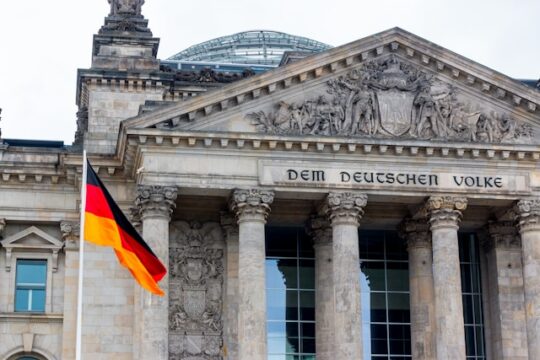
On Wednesday (from 16:30), the Bundestag will decide on an amendment to the Citizenship Act after a debate lasting around 30 minutes. The federal government's bill aims to remove the option of Naturalization after just three years - so-called Naturalization naturalization.
To explain: until now, Naturalization was possible in exceptional cases after just three years - for example, in the case of particularly good language skills at C1 level and outstanding integration achievements. In future, a minimum residence period of five years will apply for Naturalization.
The government justifies the move by stating that sustainable integration takes time and that Naturalization should be linked to a longer period of residence.
The Home Affairs Committee recommends the adoption of the law. It is considered certain that Naturalization will be abolished.

In order to be naturalized in Germany, you must meet various requirements. You can find out what these are here...
Naturalization despite citizen's income?
At the same time, a motion by the Left Party parliamentary group will be put to the vote. The party is calling for naturalization to be made possible regardless of income. People who are dependent on social benefits (through no fault of their own) - such as people with disabilities, family carers or single parents - should also be able to naturalize.
To explain: Currently, the basic requirements for Naturalization include being able to support oneself (without social benefits such as citizens' income). This means that anyone receiving a citizen's allowance is generally not entitled to a German passport. The Left Party's proposal could change this.
The Committee on Internal Affairs has recommended that this motion be rejected. It is considered unlikely that the motion will be adopted in the Bundestag.
Thursday, October 9: Implementation of the EU asylum reform (CEAS)
On Thursday (from 9:00 a.m.), the Bundestag will discuss the reform of the Common European Asylum System (CEAS). Two bills are on the agenda: the CEAS Adaptation Act and the CEAS Follow-up Act.
- GEAS Amendment Act: This concerns changes to asylum and residence law. The aim is to better manage migration, create clear procedures and at the same time ensure humanitarian standards.
- GEAS Adaptation Follow-up Act: This bill primarily adapts the Central Register of Foreigners and other laws to the new EU regulations.
Both bills will be discussed at first reading and then referred to the relevant committees. The laws are intended to adapt national law to the new EU regulations, which will apply from 2026, at an early stage.

The Blue Card is a special Residence permit for highly qualified foreigners and facilitates Settlement permit and Naturalization. Learn more...
This is what the GEAS reform actually provides for
The CEAS reform comprises a directive and ten EU regulations, which Germany intends to largely adopt. The following measures are planned, among others:
- Asylum and border procedures: Asylum applications from people who enter Germany by plane or ship via an external EU border are to be examined directly at the airport or port. If protection is not granted, a return procedure follows, which should enable repatriation to the country of origin or a third country within twelve weeks.
- Screening and EURODAC: All irregularly entered asylum seekers are to be checked within a few days - including an identity check, health and security check and biometric data collection. This data is stored in the EURODAC database, to which all EU countries have access.
- Safe third countries: In future, the federal government will be able to determine by decree which countries are classified as "safe". This should enable faster asylum procedures and returns. People from countries of origin classified as safe have less chance of being granted asylum.
- Solidarity mechanism: EU countries that are severely affected by migration should receive support from other EU countries - by taking in refugees, financial contributions or other measures.
- Freedom of movement and detention: Freedom of movement may be restricted or detention ordered in the event of violations of asylum conditions or if there is a risk of absconding - always on a case-by-case basis.
- Reductions in benefits: Anyone who violates rules in accommodation or ignores reporting obligations must expect reductions in benefits.
- Access to the labor market: Asylum seekers should be allowed to work after six months at the latest - usually after three.
- Secondary migration centers: People who have already received protection in another EU country are to be accommodated here. They can be returned directly from there.
- Stricter residence and registration obligations: Authorities are given more opportunities to oblige asylum seekers to reside and register.
- Expansion of checks at airports: In future, checks will be carried out more frequently to determine whether asylum procedures can be carried out in the transit area - i.e. before entry.
- Easier deportation of sex offenders: The legal hurdles for deportation in such cases are to be lowered.

§ Section 10 of the Residence Act (AufenthG) is a key paragraph that regulates the granting or exclusion of residence permits during asylum proceedings. ...
Thursday, October 9: AfD motion "Migration turnaround"
Also on Thursday (from 12:30 p.m.), a motion by the AfD parliamentary group will be debated for the first time. Under the title "Implementing the migration turnaround with regard to Syria - stopping further admission and promoting the return to Syria, which has been liberated from the Assad regime", the party is calling for the admission of Syrian refugees to be stopped and repatriation to the country to be promoted.
After an hour-long debate, this motion is also to be referred to the committees.
Conclusion
The coming week of sessions in the Bundestag will set clear priorities in migration and integration policy. With the planned abolition of Naturalization , the path to German citizenship will become longer again.
The CEAS Adjustment Act could also bring significant changes to the asylum procedure and have an impact on Germany's room for maneuver within the EU. The details of these changes will become clear in the upcoming committee discussions.
The AfD motion on "Migration turnaround regarding Syria" is likely to be primarily symbolic, but will be controversially discussed in the committees.