


Naturalization without own income: What does Die Linke demand?
In the motion now published, Die Linke formulates three central demands for a reform of citizenship law:
- Naturalization regardless of income: The previously mandatory requirement of being able to support oneself independently is to be dropped. This means that people who receive citizens' income support or other social benefits could also be naturalized in the future - provided they meet all other requirements.
- Clear statutory exemptions for certain groups of people: A clear exemption should be created for people whose receipt of benefits is not their own fault - such as the chronically ill, people with disabilities, family carers, parents in part-time employment, trainees and students.
- Faster procedures through better authority structure: In order to avoid long waiting times and unequal processing practices between the federal states, Die Linke is calling for better personnel, financial and digital resources for the naturalization authorities as well as uniform administrative standards throughout Germany.

Facilitated Naturalization opens up new opportunities for migrants. Find out who can benefit and how the application process works...
How does Die Linke justify the demand?
The Left Party criticizes the fact that an important exception was removed with the reform of citizenship law in 2024. In the past, Naturalization was also possible if people received social benefits - as long as they did not receive the benefits themselves, for example because they were ill, in training or a single parent. This option has been abolished.
Since then, many people who are well integrated and meet all other requirements have been excluded from German citizenship - only, according to Die Linke, because they cannot fully secure their own livelihood. Die Linke sees this as a violation of the Basic Law, which stipulates equal treatment.
According to the application, the following groups are particularly affected:
- People with disabilities or permanent illnesses who are unable to work or can only work to a limited extent due to their health situation.
- Caring relatives who take on family responsibilities and are therefore not employed.
- Senior citizens in the basic old-age pension scheme who do not belong to the so-called "guest worker generation" and therefore do not fall under the existing exemptions.
- Single parents and parents with young children who are not working or are only working part-time due to caring for their underage children.
- Students and traineeswho receive state benefits to secure their livelihood - for example, because they are caring for a child alongside their training or studies or do not receive sufficient support from other sources.
The application states that these groups are generally disadvantaged by the current legal situation, although they fulfill socially relevant tasks - for example through care, upbringing or education.
They are denied Naturalization even though they meet all other requirements. However, access to citizenship should not depend on whether someone earns a certain income.
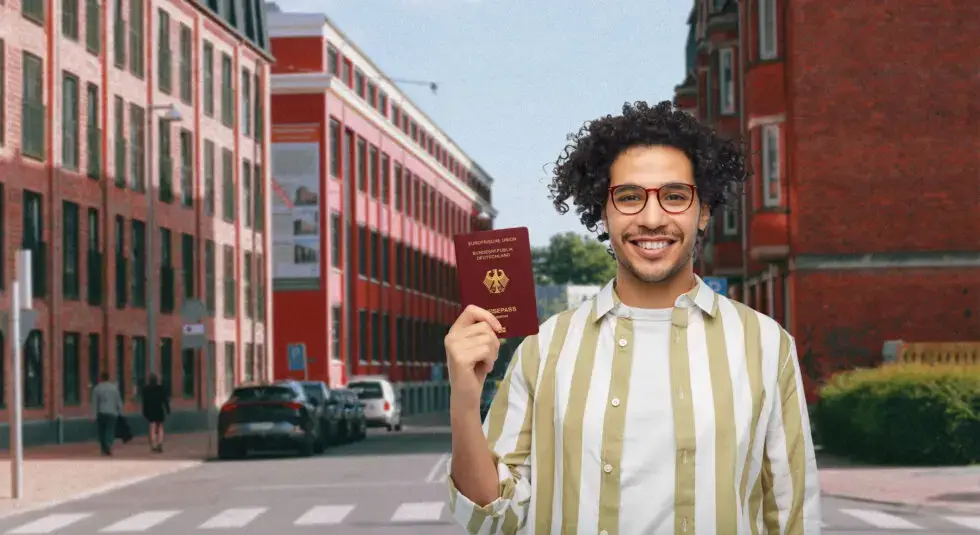
Do you want your citizenship to say "German" in the future? You can find out everything you need to know about how to obtain German citizenship here...
Demand: speed up naturalizations
Another key point in the Left's motion concerns the naturalization procedures themselves. These are often too lengthy, depend heavily on the region and are understaffed and underfunded. According to the motion, particularly in large cities and conurbations, waiting times regularly last for months - sometimes even years.
In some cases, authorities would temporarily stop accepting new applications. The Left Party is therefore calling for a coordinated strategy from the federal and state governments: Procedures should be simplified, digitized and made more uniform nationwide.
Party sees "need for further facilitation of naturalization"
The Left also emphasizes that further reforms will be necessary in the future. The parliamentary group sees a need for further action:
- Fees: The costs for naturalization procedures are too high for many people.
- Language certificates: The requirements for German language skills are sometimes disproportionately strict and could put people at a disadvantage who have otherwise integrated well.
- Children born in Germany are only automatically granted citizenship if one parent has a permanent right of residence. This regulation needs to be revised.
- The obligation to make a "declaration of commitment to the free democratic basic order" and its verification procedure repeatedly leads to discriminatory questioning in practice. Here, too, the Left sees a need for reform.

In this Blog we tell you everything you need to know about dual citizenship...
Conclusion: What happens now?
On Friday, June 27, the Left Party's motion will be debated in the Bundestag and then referred to the Committee on Internal Affairs. However, it is questionable whether this will actually result in a change to the law. Support from the governing parties - CDU/CSU and SPD - is considered rather unlikely.
The reason: the black-red coalition is currently planning to tighten asylum and migration laws rather than make them easier.
Also on the agenda on Friday are two further legislative initiatives: Firstly, family reunification for persons entitled to subsidiary protection is to be suspended for two years. Secondly, a law is being debated that aims to abolish so-called "Naturalization" after three years.