Various cookies are used on our website: technical cookies, cookies for marketing purposes and cookies for analysis purposes; in principle, you can also visit our website without cookies being set. This does not apply to technically necessary cookies. You can view and change the current settings at any time by clicking on the fingerprint that appears (bottom left). You have the right to withdraw your consent at any time. Further information can be found in our privacy policy under Cookies. By clicking on "Accept all", you agree that we may set the aforementioned cookies for marketing and analysis purposes.

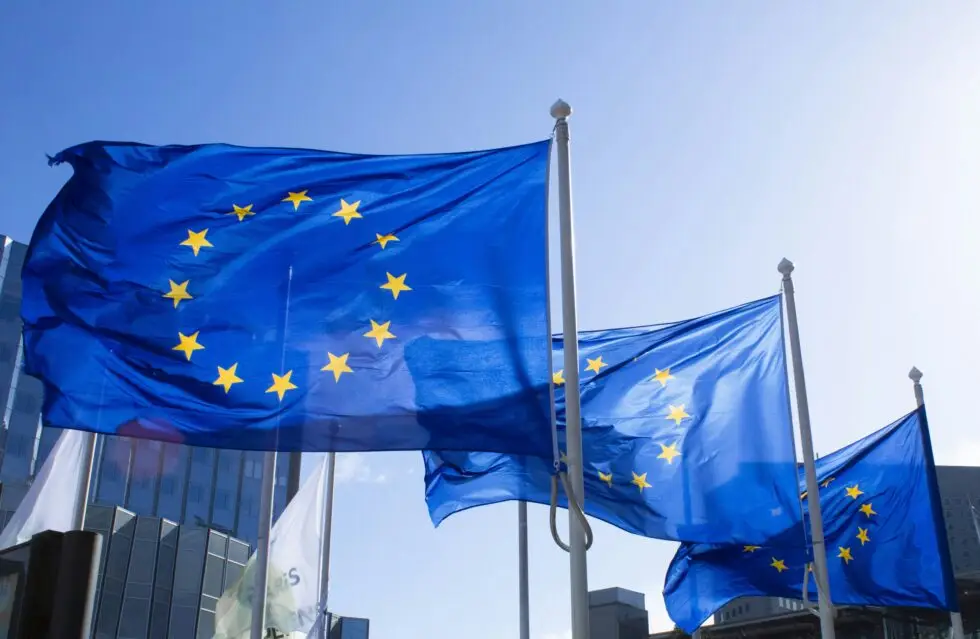
The picture shows three EU flags in front of the European Parliament in Brussels. Five EU interior ministers are calling for stricter asylum rules, including deportations, faster asylum procedures and returns.

Tough stance against migration: What was decided at the Zugspitze - and what this means for asylum seekers

Rejected asylum seekers should be able to be deported back to Syria or Afghanistan in future - this is what several EU interior ministers are calling for following a summit meeting on the Zugspitze. New repatriation centers and stricter border protection are also on the agenda. What does this mean for people seeking protection in Europe?
Written by:
Expertly reviewed by:
Christin Schneider
Expert for Immigration law

Share:

The most important goals at a glance - and what they mean in concrete terms

At the meeting on the Zugspitze, the interior ministers of Germany, France, Denmark, Austria, Poland and the Czech Republic agreed on key points of a tougher European asylum and migration policy.

EU Commissioner Magnus Brunner was also present. The host was Federal Minister of the Interior Alexander Dobrindt (CSU), who announced his intention to "noticeably" reduce illegal migration to Europe

What are the ministers demanding?

Our recommended reading

woman happy to receive subsidiary protection
Subsidiary protection: 8 important facts

What is subsidiary protection and how do you get it? We answer all your questions in this comprehensive Blog . Learn more ...

Speed up asylum procedures - prevent secondary migration

The reform of the Common European Asylum System (CEAS) agreed in 2024 is to be implemented and further developed more quickly. The aim is for asylum procedures to be carried out quickly and uniformly in all EU countries.

A central demand is so-called secondary migration. Asylum seekers who have already been recognized in an EU country should not be allowed to travel on and apply for asylum again in another EU country.

The third country concept is also being reviewed: If protection is possible in a safe non-EU country, asylum applications in the EU are to be rejected more quickly in future and those seeking protection are to be returned there.

In addition, legal options, such as appealing against a rejection, are to be reduced.

What this means for people seeking protection:

  • Asylum procedures could be completed faster, applications rejected more quickly
  • Asylum seekers have fewer legal options to lodge an appeal
  • Anyone who has already been granted asylum in an EU country has little chance of a further procedure in another country
  • Anyone who comes from a safe third country or could stay there should have more difficult access to the EU asylum system in future
Our recommended reading
http://§%2010%20AufenthG%20einfach%20erklärt%20–%20Ihr%20Aufenthaltstitel%20bei%20Asylantrag
§ Section 10 AufenthG simply explained - Your Residence permit for asylum applications

§ Section 10 of the Residence Act (AufenthG) is a key paragraph that regulates the granting or exclusion of residence permits during asylum proceedings. ...

Expand repatriations - also to Syria and Afghanistan

One particularly controversial goal is the consistent implementation of repatriations. The ministers are proposing to set up so-called "repatriation centers" in third countries. These would house rejected asylum seekers and coordinate returns and deportations centrally.

The demand to allow repatriations to Syria and Afghanistan is particularly controversial - on the condition that this is done in accordance with international law.

What this means for asylum seekers:

  • Deportations could be significantly accelerated and expanded - including to countries where the security situation is tense
  • For rejected asylum seekers, the risk of being taken more quickly to so-called return centers outside the EU and returned from there increases

Expanding the protection of the EU's external borders

Control of the EU's external borders is to be significantly strengthened. Plans include the introduction of a new digital entry and exit system (EES). The system is to register all travelers at the EU border.

In addition, more drones, vehicles and mobile patrols are to be deployed at the external borders. The digital registration of all migrants in EU databases such as Eurodac is also planned in order to enable better tracking.

The focus is particularly on the EU's eastern borders with Belarus and Russia, where controls are to be significantly tightened.

What this means for people seeking protection:

  • Entry into the EU is more closely monitored and documented
  • Full registration should already take place at the border
  • Unauthorized border crossings are to be prevented by mobile controls and drones
Our recommended reading
Blue card EU scaled scaled
EU Blue Card: Why this Residence permit is so valuable in Residence permit !

The Blue Card is a special Residence permit for highly qualified foreigners and facilitates Settlement permit and Naturalization. Learn more...

Strengthening partnerships with third countries

In order to prevent irregular migration before it arrives in Europe, the EU wants to work more closely with countries of origin and transit. The aim is to create better prospects locally and manage migration movements at an early stage.

Planned are:

  • Helping to set up local asylum systems
  • New structures for the reception and return of asylum seekers
  • Support in administration, justice and law enforcement
  • Deployment of European experts to crisis regions

What this means for asylum seekers:

  • At best, asylum seekers should encounter a functioning asylum system in the neighboring country of their home country or a safe third country
  • At the same time, improved living conditions and prospects in the country of origin should lead to fewer people wanting to flee or migrate in the first place
Our recommended reading
http://Niederlassungserlaubnis%20für%20die%20Blaue%20Karte
Settlement permit for the Blue Card

With the Blue Card, you can apply for a settlement permit after just 27 months (21, with sufficient knowledge of German). Find out more...

Criticism of meeting of interior ministers

Important initial host countries such as Italy, Greece and Spain were not invited to the meeting on the Zugspitze. Many refugees arrive there first. Critics therefore accuse the interior ministers of making decisions over the heads of the affected countries.

Nevertheless, host Dobrindt speaks of a "milestone in European migration policy". In the coming months, there are likely to be further debates at EU level about funding, legal bases and implementation.

Conclusion: When will the measures come into force?

The meeting on the Zugspitze sends a clear signal: the EU should take more consistent action against irregular migration in future. Faster asylum procedures, more returns and border controls, as well as cooperation with third countries are the key levers.

However, how quickly and to what extent these plans will actually be implemented is currently unclear and depends on the approval of the EU Parliament, the other member states and the third countries concerned.

So far, the decisions of the interior ministers are merely demands -not applicable EU law.

Do you have any questions?
Are you experiencing difficulties with the naturalization process and still have questions? Contact us and our legal experts will be happy to help you with any question!
anna profile picture
Anna Faustmann
Editor
Anna Faustmann is an editor at Migrando . With her sound education and many years of experience in journalism and digital marketing, she brings a deep understanding of the conception and creation of ...