

Syrian government warns against premature return
The Syrian Foreign Ministry has spoken out against the rapid return of large groups of refugees from Germany. The Director of Consular Affairs, Mohammed Yaqub al-Omar, explained that Syria needs more time to rebuild the country. The rapid return of thousands of people could further exacerbate the tense humanitarian situation.
According to the Syrian government, homes, schools, and roads are still destroyed in many regions. The power supply is also only functioning to a limited extent.
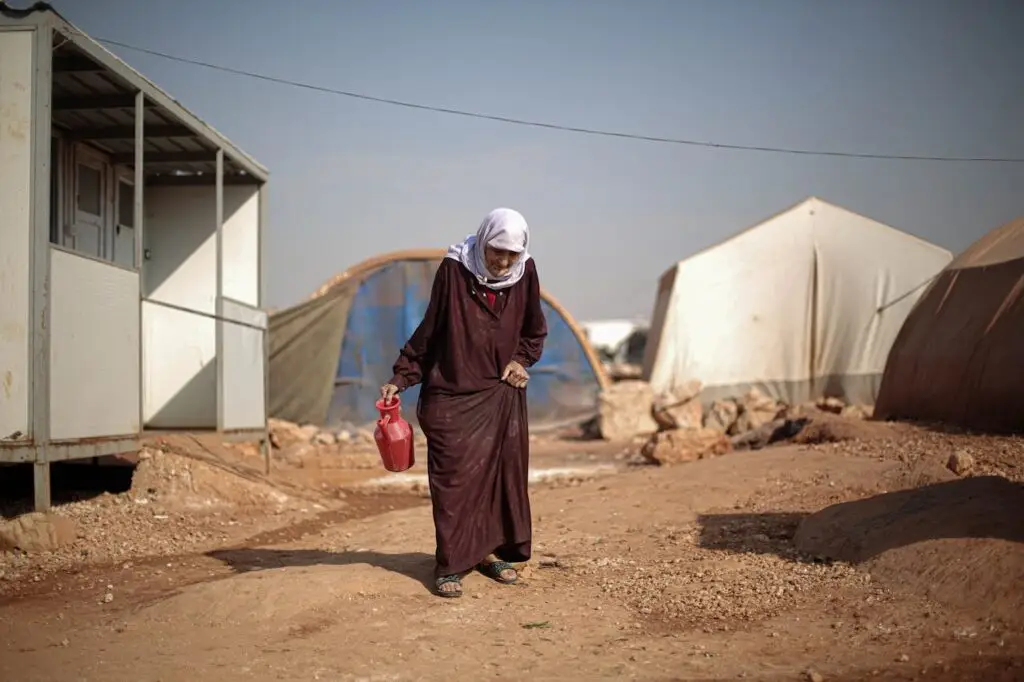
The situation in northern Syria is particularly difficult: around 1.5 million people are currently living there as internally displaced persons in tent camps. Under these conditions, it is often impossible for returnees to return to their former homes or to live there permanently.

Children born in Germany to Syrian parents do not need to present a Syrian national passport. An extract from the marital status register is sufficient to prove the identity and nationality of the child....
Reconstruction as a prerequisite for repatriation
According to its own statements, the Syrian transitional government is working to restore the country's infrastructure. Only once these conditions have been met will it be possible to organize a larger-scale return of the country's own population.
More than a year ago, Syrian Foreign Minister Asaad Hassan al-Schaibani stated that, in his view, the rapid return of Syrian refugees from Europe did not make sense. Without safe and stable living conditions, there was a risk that returnees would once again find themselves in need.
Germany has been deporting people back to Syria since the end of 2025.
In its coalition agreement, the German federal government, consisting of the CDU/CSU and SPD, agreed to make deportations to Syria possible again in principle and to carry them out regularly. Criminals and dangerous individuals were to be the first to be deported.
In December 2025, Syrian nationals who had committed criminal offenses were repatriated to Damascus for the first time on a scheduled flight accompanied by the federal police. Since then, there have been further deportations, but only on a very small scale so far. According to official information, there have been no deportations of Syrian nationals who have not committed criminal offenses.
During a visit to Syria in October, Foreign Minister Johann Wadephul also stated that a return is currently not realistic for most people. Many regions remain destroyed and safe living conditions are lacking.

Federal Interior Minister Dobrindt is planning an agreement with Syria. This could make deportations possible again for the first time in years – initially for criminals, and later also for people without residence permits....
Germany provides support for voluntary return
While deportations to Syria have only been carried out in a few cases so far, the German government is focusing primarily on voluntary return programs. Since January 2025, Syrians in Germany have been able to apply for government support to return permanently to their home country.
An important tool in this regard is the REAG/GARP return program coordinated by the Federal Office for Migration and Refugees (BAMF). Among other things, this program covers the travel costs for voluntary return. In certain cases, returnees also receive additional financial start-up assistance. As a rule, the BAMF can provide support of up to €1,700 per person or up to €4,000 per family.
Important: However, there is no legal entitlement to this start-up assistance. The authorities always assess each individual case to determine whether financial support will be granted and, if so, how much.
According to the BAMF, almost 6,000 people took advantage of this opportunity last year. Around 3,700 people have already left voluntarily. In addition, the federal states also organize voluntary departures, which are financially supported by the BAMF. Between December 2024 and the end of January 2026, the departure of 426 Syrian nationals was facilitated in this way.

Following renewed fighting in Syria, the Left Party is calling for a nationwide halt to deportations. However, the federal government is currently pursuing a stricter course. How realistic is a halt to deportations—and what currently applies to Syrian refugees?
Political debate continues in Germany
Within German politics, there continue to be differing assessments of the situation in Syria—and how Syrian refugees should be dealt with.
Chancellor Friedrich Merz (CDU) has stated several times that the civil war in Syria is officially over. In his view, this has changed the basis for protection in Germany. He said that there are now no longer any grounds for asylum from Syria and that repatriation is therefore possible.
Interior Minister Alexander Dobrindt (CSU) confirmed that the federal government is working on further repatriations to Syria. He said that the aim is to reach an agreement with Syria that will enable the regular deportation of criminals and, at a later stage, the return of other individuals without residence rights.
There has been strong criticism from the opposition. The chairwoman of the Left Party, Ines Schwerdtner, considers the debate on deportations and voluntary return to Syria to be misguided. In her opinion, civil war-like conditions continue to prevail in Syria. She therefore believes that Germany should not deport anyone or encourage voluntary departure at this time.
The Green Party expressed similar views. Party leader Franziska Brantner stated that her party fundamentally supports voluntary return programs. At the same time, she pointed out that many Syrians in Germany work in important and systemically relevant professions. Germany therefore also has an interest in ensuring that many of them can continue to live here.
Brantner also reiterated her support for exploratory trips. These would allow those entitled to protection to assess whether returning home is an option for them without losing their residence status. However, the federal government has so far rejected such trips. Under current law, Syrians lose their protection status if they travel to their country of origin without good reason.