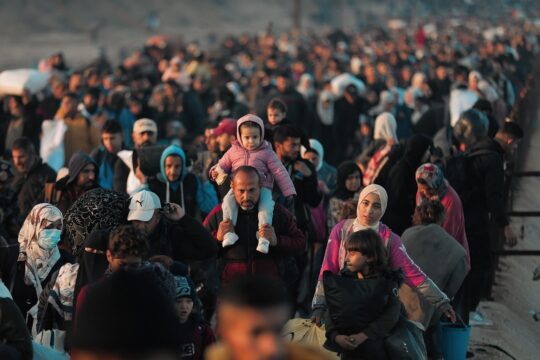
According to Bild, the Federal Office for Migration and Refugees (BAMF) has been instructed to process and decide more asylum applications from Syrian nationals. Priority is to be given to young men who are able to work.
Dobrindt also indicated that in future a greater distinction would be made between well-integrated Syrians and those who are not entitled to asylum and are not willing to integrate. In addition, asylum should also be denied in future if refugees return to their country of origin at short notice after entering Germany. to their country of origin have traveled back to their country of origin.

Family reunification is an important issue for many refugees from Syria. Those involved often do not know whether they can bring their family members to Germany or not. There are various options for reunification, from regular family reunification to family reunification.
What asylum rules have applied to Syrians in Germany so far?
Since the beginning of the civil war in 2012, deportations to Syria and decisions on asylum applications have been largely suspended. This was based on Section 24 (5) of the Asylum Act, which stipulates that decisions on asylum applications can be postponed if the situation in the country of origin is unclear. As Syria was considered particularly dangerous for a long time, many refugees were granted asylum under the Geneva Refugee Convention.
It was not until May 2025 that the Administrative Court in Karlsruhe ruled that this suspension was no longer justified. Since then, the BAMF has been actively examining and deciding on Syrian asylum applications again. However, protection status is no longer granted automatically, but is now based more on the respective region of origin and the individual's living situation.
According to the Federal Statistical Office, there were around 975,000 Syrian nationals living in Germany at the end of 2024. Of these, around 713,000 belong to the group of people seeking protection, i.e. people who are in Germany for humanitarian or political reasons - including asylum seekers. In 2024, 83,150 Syrian nationals were naturalized.
Since the fall of long-time ruler Bashar al-Assad in December 2024, almost 1,900 Syrians have voluntarily returned to their home country with state support.
Children born in Germany to Syrian parents do not need to present a Syrian national passport. An extract from the marital status register is sufficient to prove the identity and nationality of the child....
Deportations to Syria receive praise and criticism
Bavaria's Interior Minister Joachim Herrmann (CSU) supports Dobrindt's course. In an interview with the media portal Merkur, he spoke out in favor of deporting young Syrians without work and Residence permit if they do not show a willingness to integrate. At the same time, he emphasizes that well-integrated people should not be affected. Herrmann argues that many regions of Syria are no longer life-threatening, which is why there should be no automatic entitlement to protection.
However, the plans have been criticized by the Green Party and international organizations. The UN Refugee Agency (UNHCR) warns against a hasty return of Syrian refugees. The UNHCR representative in Syria, Gonzalo Vargas Llosa, told the Süddeutsche Zeitung that the country is already overburdened with the reception of returnees from neighboring countries. An additional repatriation from Europe could further exacerbate the situation.
And according to a report by the Bundestag's Research Service, the human rights situation in Syria remains critical. Although the new transitional government led by the Islamist militia Haiat Tahrir al-Sham (HTS) has formally ended the civil war, control and security remain unstable. The report documents massacres and serious attacks against religious minorities, particularly Alawites and Druze.
§ Section 10 of the Residence Act (AufenthG) is a key paragraph that regulates the granting or exclusion of residence permits during asylum proceedings. ...
Federal government also examines deportations to Afghanistan
In addition to Syria, the German government is also working on a repatriation agreement with Afghanistan. Interior Minister Dobrindt recently confirmed that talks with the Taliban government are well advanced. The aim is to be able to carry out regular deportations in future - including by scheduled flight.
Despite criticism of the negotiations with the internationally unrecognized Taliban government, Dobrindt emphasized his determination to carry out regular deportations to both Afghanistan and Syria in the future.
Conclusion
It is not yet clear when the talks with the Syrian transitional government will actually begin and whether an agreement will be reached this year.
The planned measures could have tangible consequences for Syrian refugees in Germany. If a repatriation agreement is concluded with Damascus, deportations to Syria would be conceivable for the first time in years - initially for criminals and people at risk, and later possibly also for people without a valid Residence permit or with a rejected asylum application.
The reprocessing of asylum applications from Syrian nationals by the Federal Office for Migration and Refugees (BAMF) could also lead to stricter checks and therefore more rejections.