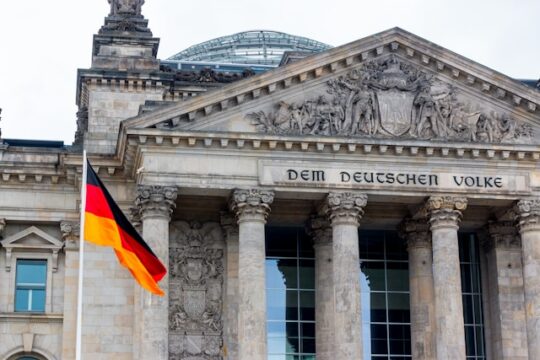
Largest political group in the European Parliament calls for stricter asylum rules
The European People's Party (EPP) is the largest political group in the European Parliament. Its members include the CDU/CSU, which are part of the German federal government. At a meeting in Vienna, the EPP has now adopted a position paper calling for further tightening of European asylum policy.
According to reports from several media outlets, including *Bild*, *Welt*, and *Focus Online*, the EPP envisions that it will be easier in the future to turn away asylum seekers at the EU’s external borders. This would be possible, in particular, if they are attempting to enter the European Union from a safe third country. This refers to countries where, in the EU’s assessment, asylum seekers would already be safe or could receive protection.
The EPP is calling for member states to be granted an explicit right to reject applications in such cases. Currently, anyone who files an asylum application in the European Union is entitled to an asylum proceeding. It is precisely this rule that the EPP wants to review and amend.
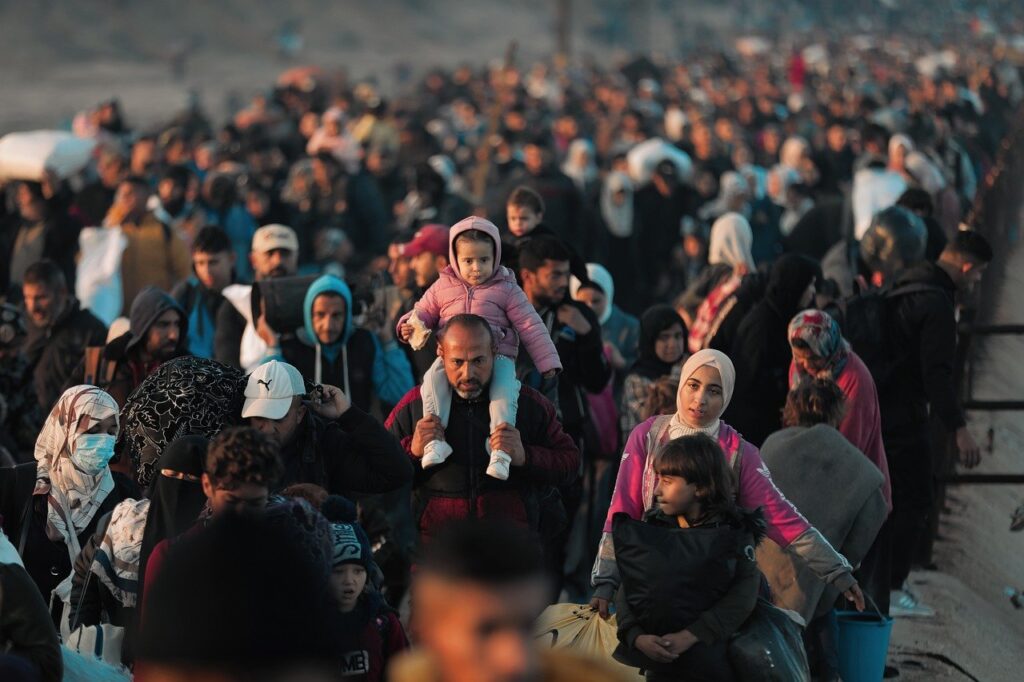
With the launch of GEAS, key rules for asylum seekers in the EU are changing. These include new screening procedures, border procedures, stricter Dublin rules, and potential cuts to benefits. Who is affected, and what exactly is changing?...
Should subsidiary protection be abolished?
Another important point concerns subsidiary protection. This protection status is granted to people who are not recognized as refugees under the Geneva Convention on Refugees but who would nevertheless face a serious risk of harm if returned to their country of origin—for example, due to war, torture, or inhumane treatment.
According to the Central Register of Foreigners (AZR), there are currently about 373,000 people in Germany with subsidiary protection. They are most often from Syria, Afghanistan, or Iraq.
According to media reports, the EPP wants to have an assessment conducted to determine whether subsidiary protection can be abolished. Proponents argue that subsidiary protection was originally intended for temporary crisis situations. Today, however, they say it often results in people remaining in the European Union permanently, even though conditions in their country of origin have since improved.
Some members of the CDU/CSU also share this view. EPP Group Leader Manfred Weber (CSU) told *Bild* that he believes Syrian nationals with subsidiary protection, in particular, have a duty to help rebuild their home country. At the same time, he emphasized that the EPP’s demands primarily pertain to future crisis situations.
Upper limit on the number of asylum seekers accepted?
The debate has also reignited discussions about a possible cap on the number of asylum seekers. According to *Bild*, CDU politician Detlef Seif spoke out in favor of imposing stricter limits on the admission of refugees. He cited a (personal) maximum of 300,000 asylum seekers per year for the entire European Union.
Such a cap would be legally controversial. This is because the right to asylum is an individual right. This means that every asylum application must be reviewed on a case-by-case basis. Whether a person is granted protection depends not only on political guidelines, but above all on their personal circumstances and the situation in their country of origin. Whether a fixed cap is compatible with European and international law would therefore have to be examined from a legal perspective.

The new EU asylum system will also make "return hubs" possible. The planned repatriation centers outside the EU could soon become a reality. But who will be housed there, and when and where might they be established?...
Conclusion: Will subsidiary protection be abolished?
Important: The EPP’s proposals are not yet law. They are merely political proposals. For the rules to change, the European Commission would have to submit a legislative proposal. Subsequently, both the European Parliament and the EU member states would have to approve it.
For people who have been granted protection status, nothing will change for the time being. Subsidiary protection will also continue to be granted under current laws. Existing Residence permit and protection decisions will remain valid as long as they are not revoked in legal proceedings.
Nevertheless, the current debate shows that European asylum policy remains in flux even after the CEAS reform has taken effect. Conservative parties such as the EPP are already calling for further restrictions. It is therefore important for asylum seekers, beneficiaries of subsidiary protection, and people with ongoing asylum proceedings to closely monitor further developments.