With these two laws, Germany is implementing the new asylum rules recently adopted by the EU. This means that the new rules will apply not only in Germany, but in all member states of the European Union.
This particularly affects the right to asylum, the right of residence, and the regulations on data storage in the Central Register of Foreigners (AZR).
§ Section 10 of the Residence Act (AufenthG) is a key paragraph that regulates the granting or exclusion of residence permits during asylum proceedings. ...
Identity checks and border procedures: Who is affected?
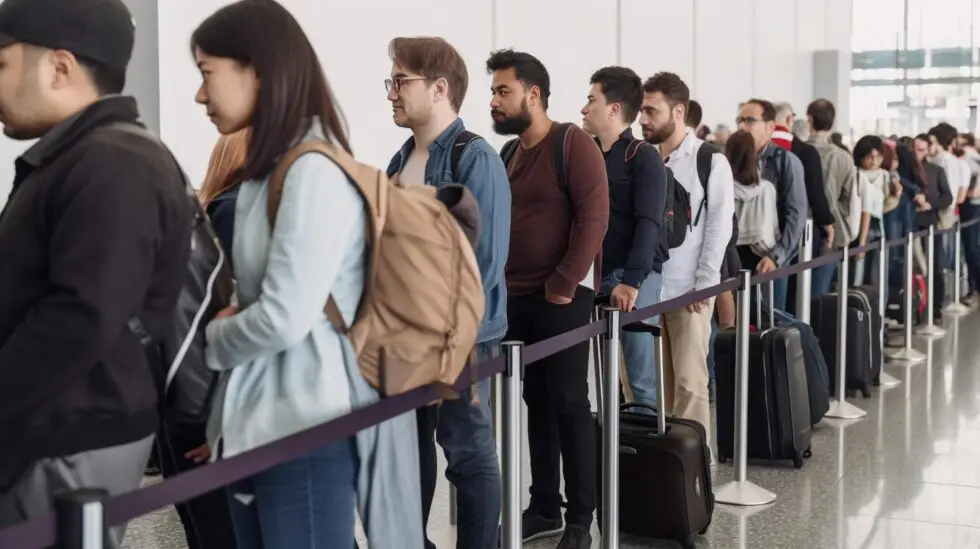
A key element of the new rules is mandatory identity checks upon entry into the EU. In future, all asylum seekers arriving at the EU's external borders will be registered.
To this end, fingerprints are taken, photographs are taken, and identity documents are checked. The data is then stored in a database that all EU countries have access to.
In addition, there will be a new form of asylum procedure known as the border procedure. This will take place directly at the EU's external border, i.e., before a person is officially allowed to enter. During the procedure, asylum seekers will be accommodated in facilities in the border area until a decision has been made on their application.
Germany has no external EU land borders. Therefore, border procedures here mainly concern international airports and seaports.
The new rules provide for border procedures for the following groups:
- Persons with an asylum recognition rate of 20 percent or less,
- Persons who misrepresent their identity or do not cooperate sufficiently in clarifying their identity,
- Persons who are classified as a threat to national security or public order.
If the asylum application is rejected as unfounded in the border procedure, the return should be carried out directly from the border.
However, it is important to note that constitutional standards must also be observed in border procedures. These include the right to a hearing, an individual assessment of the application, and the possibility of appealing against the decision.
Faster Dublin procedures and longer deadlines for returns
Another focus of the new laws concerns the so-called Dublin procedure. This deals with the question of which EU country is responsible for examining an asylum application.
As a general rule, the country responsible is the country through which a person first entered the EU or in which they were first registered.
In future, authorities will have to check more quickly whether another Member State is responsible. At the same time, the deadlines for transfers will be extended. This means that it will now take longer than before to return someone to the responsible EU country.
In the past, the deadline was between 6 and 18 months. If a person was not transferred to the responsible EU country within this period, Germany became responsible for the asylum procedure. In future, repatriation will be possible for a significantly longer period.
For asylum seekers, this means that anyone who has already been registered in another EU country or who first entered that country will in future be more likely to be returned there.

The EU wants to implement comprehensive asylum reform by 2026. The plans include stricter border procedures, faster asylum decisions, and more repatriations. Find out here what changes are coming and what this means for refugees....
Secondary migration centers: Who should be accommodated there?
The possibility of setting up secondary migration centers in Germany is particularly controversial. These facilities are intended to house asylum seekers,
- who have already been registered in another EU country, or
- who have been granted protection status in another Member State.
They are to remain there until they can be returned to the EU country responsible for their asylum application.
Strict residence and stay requirements will apply in the planned centers. Single adults will be able to stay there for up to 24 months. For families with minor children, however, the accommodation period will be limited to a maximum of 12 months.
During this period, asylum seekers are not permitted to move freely within the federal territory. Anyone who leaves the facility without permission must expect reductions in their asylum benefits.
The respective federal states decide whether and to what extent such centers will actually be established.
Faster start of work: Who will be allowed to work after three months in the future?
In addition to the tightening of regulations, the reform also includes an important change for asylum seekers who are already in Germany: in future, they will be able to access the labor market after just three months.
Previously, asylum seekers living in initial reception centers were prohibited from working for six months. Those who were no longer housed there were allowed to work after three months, but many of those affected remained in such facilities for longer and were therefore unable to take up employment.
The new law uniformly reduces the period to a maximum of three months. According to the federal government, this is intended to facilitate integration into the labor market and help people with prospects of remaining in Germany find work more quickly.
The prerequisite is that the identity has been clarified and there are no other legal obstacles. However, the new regulation does not apply to everyone. The following are excluded:
- Persons from countries of origin classified as safe
- Dublin cases where another EU country is responsible for the asylum procedure
- Persons who repeatedly violate their obligation to cooperate, for example by concealing their identity or failing to provide the necessary documents.
For asylum seekers in Germany, this means that they will be able to start working more quickly in the future—even while the asylum procedure is still ongoing.

In future, the federal government will be able to determine for itself which countries are considered safe countries of origin. What does this mean for asylum seekers?
Conclusion: What do the new laws mean for asylum seekers in Germany?
The implementation of the EU asylum reform is bringing about noticeable changes to the German asylum system. For asylum seekers already living in Germany, the specific impact will depend heavily on individual circumstances:
- For those who are registered exclusively in Germany and are undergoing the regular asylum procedure, little will change in the current procedure.
- Those who have previously been registered in another EU country are more likely to be transferred to that country. The authorities will have more time and opportunities to enforce such transfers.
- Individuals with unclear identities or who fail to cooperate must expect stricter controls and disadvantages—for example, in terms of access to the labor market or benefits.
- In principle, asylum seekers will be able to take up employment after just three months in future – even while their application is still being processed.