

Open letter to the German Ministers of the Interior and Foreign Affairs
On the occasion of International Human Rights Day (December 10), more than 250 organizations published an open letter to the German government. The letter is primarily addressed to Federal Minister of the Interior Alexander Dobrindt (CSU) and Foreign Minister Johann Wadephul (CDU).
In it, they call on the federal government to do "everything in its power" to enable Afghans with valid admission permits to enter the country before the end of the year.
Signatories include Pro Asyl, the AWO Federal Association, the Paritätische Gesamtverband, Bread for the World, Amnesty International Germany, Human Rights Watch, and the Kabul Airlift Initiative. They also warn of the consequences of further delays.
§ Section 10 of the Residence Act (AufenthG) is a key paragraph that regulates the granting or exclusion of residence permits during asylum proceedings. ...
Pakistan demands departure to Afghanistan
The appeal was prompted by a deadline set by the Pakistani government for the end of December 2025. By this date, Afghan nationals who are required to leave the country and have been granted asylum in Germany must leave Pakistan and travel to other countries. Otherwise, they face deportation to Afghanistan.
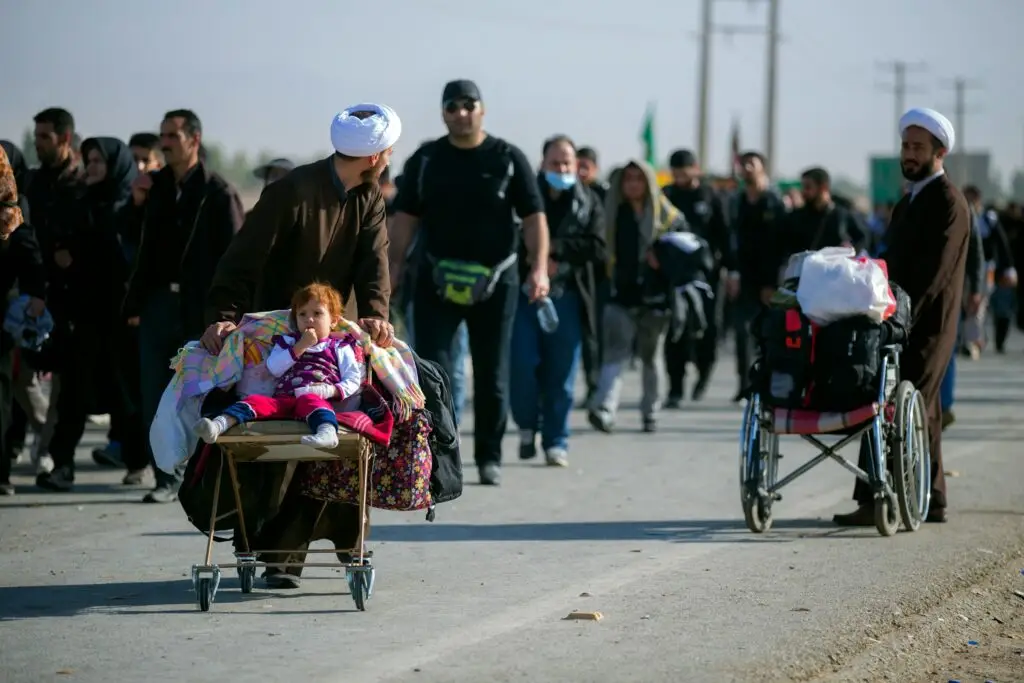
According to various estimates, there are currently between 1,300 and 1,800 Afghans with German admission permits in Pakistan. Over 70 percent of them are said to be women and children. Many have been waiting for months in uncertain conditions and without reliable residence status to leave for Germany.
Some of those affected were already deported back to Afghanistan in late summer. Others have since been granted visas to enter Germany.
Background: What are admission programs?
After the Taliban seized power in August 2021, Germany launched several humanitarian admission programs. The aim was to enable Afghans who were considered particularly at risk under the new government due to their previous cooperation with German organizations to be granted permanent residence in Germany.
The most important programs include the federal admission program pursuant to Section 23 (2) of the Residence Act and various procedures pursuant to Section 22 of the Residence Act, for example for former local staff or persons on the so-called human rights list.
However, following the change of government in Berlin in May 2025, the admission programs were significantly restricted. The coalition agreement between the CDU/CSU and SPD stipulates that voluntary admission programs should be terminated "as far as possible." The CDU/CSU in particular repeatedly expressed security concerns and questioned the continuation of individual programs.
At the beginning of May, the federal government suspended the admission programs entirely. Since then, the authorities have focused exclusively on individuals who have already received an admission commitment or are still in the process of obtaining a visa.
However, as progress on these cases has been very slow recently, several of those affected decided to take legal action against the delays. In several cases, German courts dealt with the pending proceedings and obliged the federal government to make a decision.
As a result, Afghan women and men from existing admission programs have repeatedly entered Germany in recent weeks.

If you are only tolerated as a refugee, you are often playing with uncertainty. It is unclear how long your stay in Germany will last....
Who are the people affected?
The individuals involved are people from various German reception programs. These include former local staff of the German Armed Forces and the German Society for International Cooperation (GIZ), employees of international and German aid organizations, journalists, judges, human rights activists, cultural workers, and members of the LGBTQ community.
Many of them are said to have worked for years to promote democracy, the rule of law, and human rights in Afghanistan —often in close cooperation with German institutions or with financial support from Germany. After the Taliban took power in August 2021, they fled to Pakistan because that is where the German admission procedures are handled.
Demands on the federal government
The signatories of the open letter urgently warn of the consequences of deportation to Afghanistan. Under the Taliban government, those affected face persecution, arbitrary detention, abuse, or even death.
Women, former government employees, journalists, and people who have publicly advocated for human rights are particularly at risk.
According to the organizations, Germany gave these people a promise of protection when it agreed to take them in. This promise must not be broken.
Specifically, the organizations demand:
- Enable rapid departure: All persons who have been granted admission should be able to leave the country without bureaucratic hurdles before the end of the year.
- Complete procedures: Security checks and visa procedures should be completed without further delay for all admission programs.
- Protection against deportation to Afghanistan: The German government should use all available means to prevent deportations to Afghanistan and ensure safe accommodation until the proceedings have been concluded.

A Settlement permit a permanent right of residence that is not limited in terms of time or location. This means that you can live here permanently and have almost the same rights as German citizens. We Settlement permit the many advantages of a Settlement permit in...
"Kabul Appeal": Prominent figures criticize delays
The so-called "Kabul Appeal" is putting additional pressure on the federal government. In another open letter, prominent figures criticize what they see as delays in the entry of Afghans who have been promised admission by the former federal government.
The signatories include numerous prominent figures from the German media landscape, including ZDF Magazin Royale presenter Jan Böhmermann, actresses Iris Berben and Collien Fernandes, investigative journalist Günter Wallraff, and writer Navid Kermani.
In addition, around 600 Afghans had already written to the federal government in the fall. In their letter, they explained that they had fled not from poverty, but from "violence and death." They were particularly critical of an offer from the Federal Ministry of the Interior to waive the promised protection in exchange for several thousand euros.
Federal government withdraws commitments for 640 people
Last week, the Federal Ministry of the Interior announced that around 640 Afghan nationals would not be allowed to travel to Germany despite having previously been granted admission. This affects individuals who received their admission under the bridging program or via the human rights list.
According to the Ministry of the Interior, these people will be officially informed in the coming days that there is no longer any "political interest" in their admission. Entry into Germany is therefore no longer planned in these cases.
The government justifies this with a reassessment of the legal binding nature of individual programs. Commitments made under the federal admission program pursuant to Section 23 (2) of the Residence Act have been repeatedly deemed legally binding by courts and should therefore continue to be implemented. However, the federal government classifies commitments made under other programs differently. It considers these to be political commitments that, in its view, can be revoked.